Business - SME
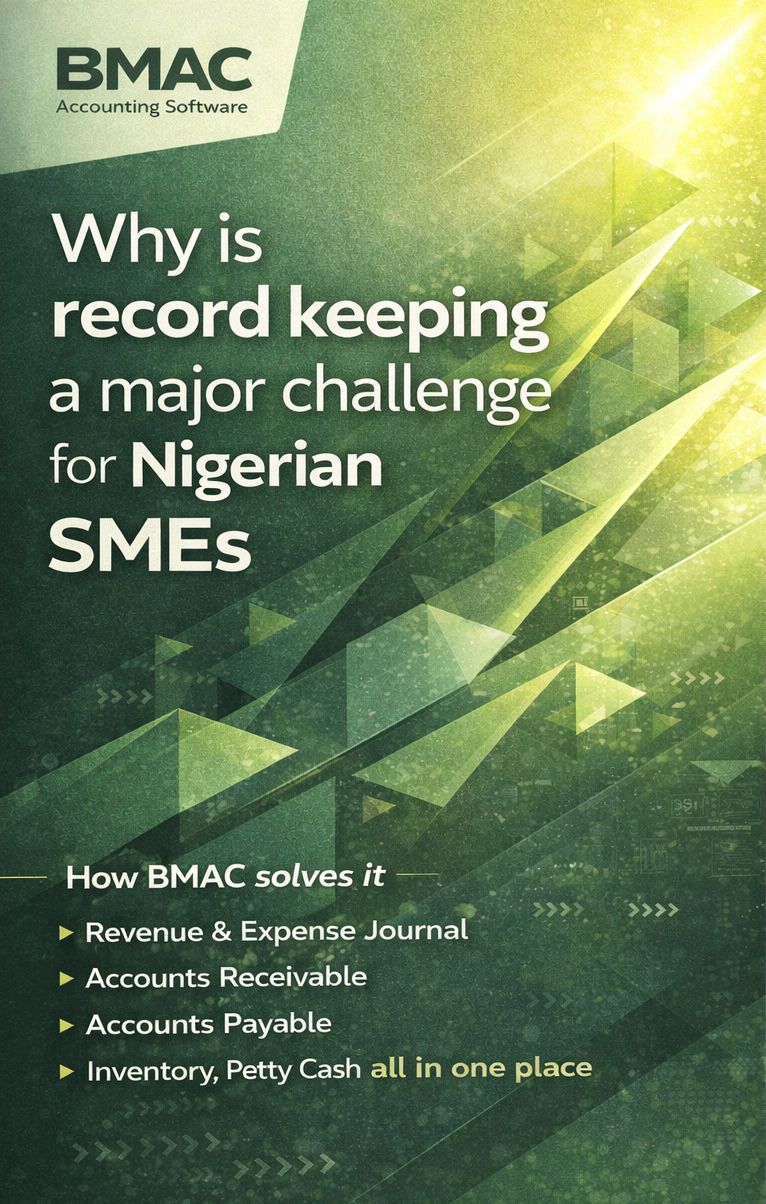
Why Record Keeping Is a Major Challenge for Nigerian SMEs (And How BMAC Solves It)
Small and Medium Enterprises (SMEs) form the backbone of Nigeria's economy. Yet, many of these businesses struggle with a fundamental aspect of operations: proper record keeping. What seems like a simple administrative task often becomes a critical stumbling block that hinders growth, compliance, and profitability. In this post, we'll explore why record keeping remains such a persistent challenge and introduce how BMAC provides a practical solution.
The
Record Keeping Crisis: Why Nigerian SMEs Struggle
1. Limited Financial Literacy
Many SME owners are experts in their trade but lack
formal accounting training. The concepts of double-entry bookkeeping, cash flow
statements, and balance sheets can seem like foreign languages, leading to
either neglected records or error-prone manual systems.
2. Time
and Resource Constraints
With owners often wearing multiple hats, from sales to
operations to customer service, record keeping gets relegated to "when
there's time." Unfortunately, that time rarely comes, resulting in
backlogs that become overwhelming.
3. Heavy
Reliance on Manual Processes
Many SMEs still depend on notebooks, spreadsheets, or
verbal tracking of transactions. While this may work at the beginning, it
quickly becomes overwhelming as the business grows.
4. Cash Flow Confusion
A common scenario among Nigerian SMEs is this:
“Sales are high, but there’s no money.” Without structured record keeping, it
becomes difficult to track receivables, monitor payables, Separate personal and
business expenses, understand where profits are leaking.
The
Consequences of Poor Record Keeping
·
Cash Flow Problems: Without tracking
receivables and payables, businesses struggle with liquidity
·
Missed Opportunities: Inadequate financial
data means poor decision-making regarding investments and growth
·
Tax Compliance Issues: Poor records lead to
compliance issues, penalties, and stressful encounters with regulatory bodies.
·
Difficulty Securing Funding: Many businesses
revert to paper-based systems that are vulnerable to damage, loss, and
disorganization. Banks and investors require proper financial records
·
Operational Inefficiencies: Inventory
mismanagement, payroll errors, and supplier disputes become common
Introducing BMAC: A Solution Designed
for Nigerian SMEs
BMAC accounting and inventory software addresses these
challenges with a platform specifically designed for the Nigerian business
environment. Here's how:
1.
User-Friendly Interface
BMAC simplifies accounting with an intuitive dashboard
that requires no prior accounting knowledge. Color-coded categories, simple
input forms, and visual reports make financial management accessible to every
business owner.
2.
Regulatory Compliance Built-In
BMAC stays updated with Nigerian tax laws and financial
regulations, automatically calculating VAT, generating compliant invoices, and
preparing reports that meet regulatory standards.
3.Real-Time
Inventory Management
With BMAC, businesses can, track stock levels in real
time, monitor product movement, reduce losses from theft or miscounts, avoid
overstocking or stockouts
3.
Multi-User Access
Business owners can grant limited access to accountants,
bookkeepers, or partners without compromising security, facilitating
professional collaboration at minimal cost.
4. Cloud-Based
Accessibility
Because BMAC is cloud-based, records are securely stored
online, data is accessible anytime, anywhere, there’s no risk of losing books
to fire, theft, or damage, business owners can monitor operations remotely.
5.
Tax-Ready Documentation
With organized records and structured reports, SMEs can, prepare accurate tax filings, track VAT properly, respond confidently during audits.

Top Related Post
Business - SME
Rejected for a Business Loan? Your Books Might Be...
Business - SME
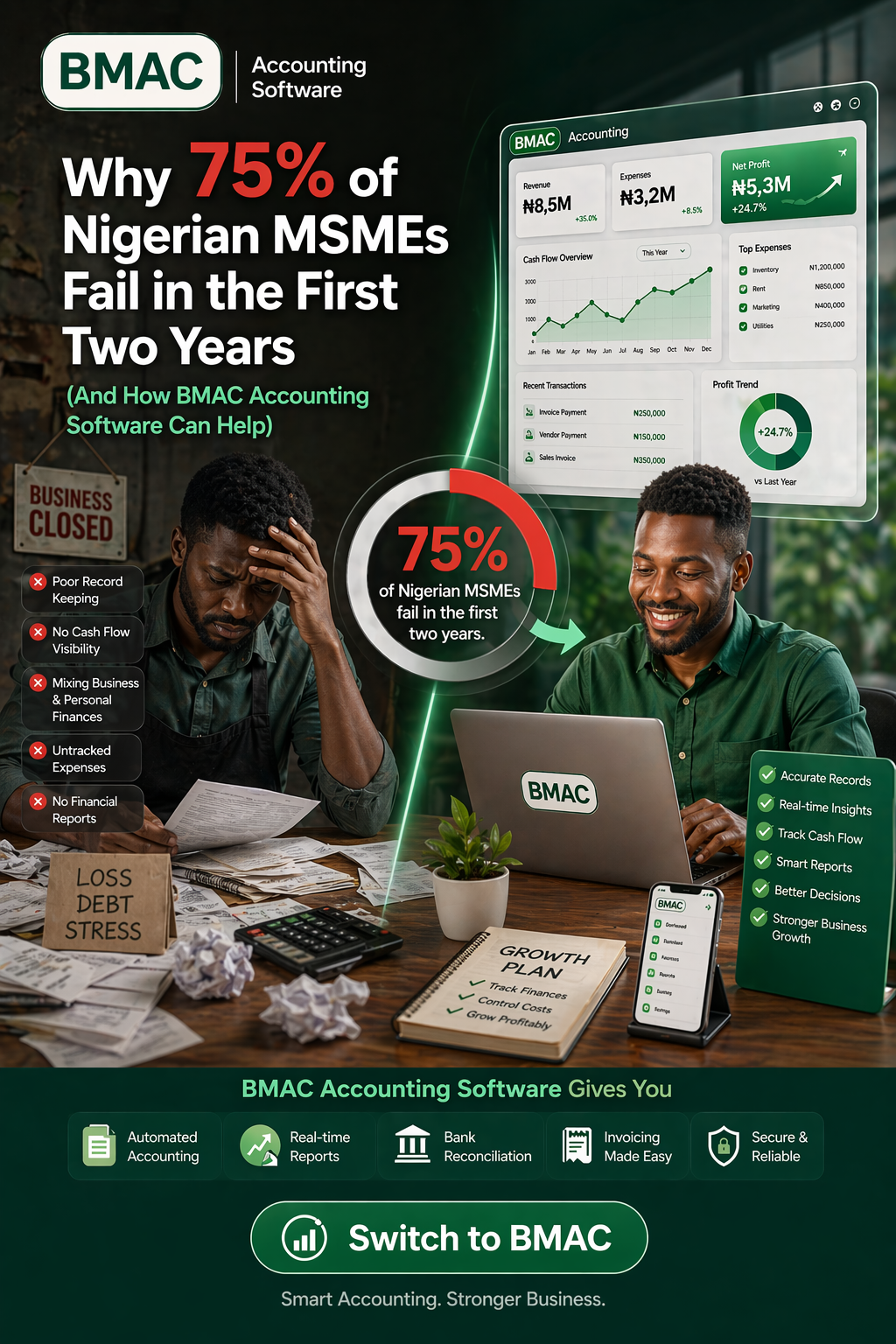
Why 75% of Nigerian MSMEs Fail in the First Two Ye...
Business - SME
The True Cost of Manual Accounting: How Nigerian S...
Business - SME
Why Record Keeping Is a Major Challenge for Nigeri...
Business - SME
Securing Your Financial Future: Why BMAC Accountin...
Business - SME
Maximising Business Profitability through Cost Man...
Business - SME
How To Plan Your Financial Future Using Cash Flow...
Business - SME
Essential Key Performance Indicators Every Small B...
Business - SME
Common Mistakes Small Business Owners Make & How t...
Featured Posts
-
-
-
 29 APR, 2026
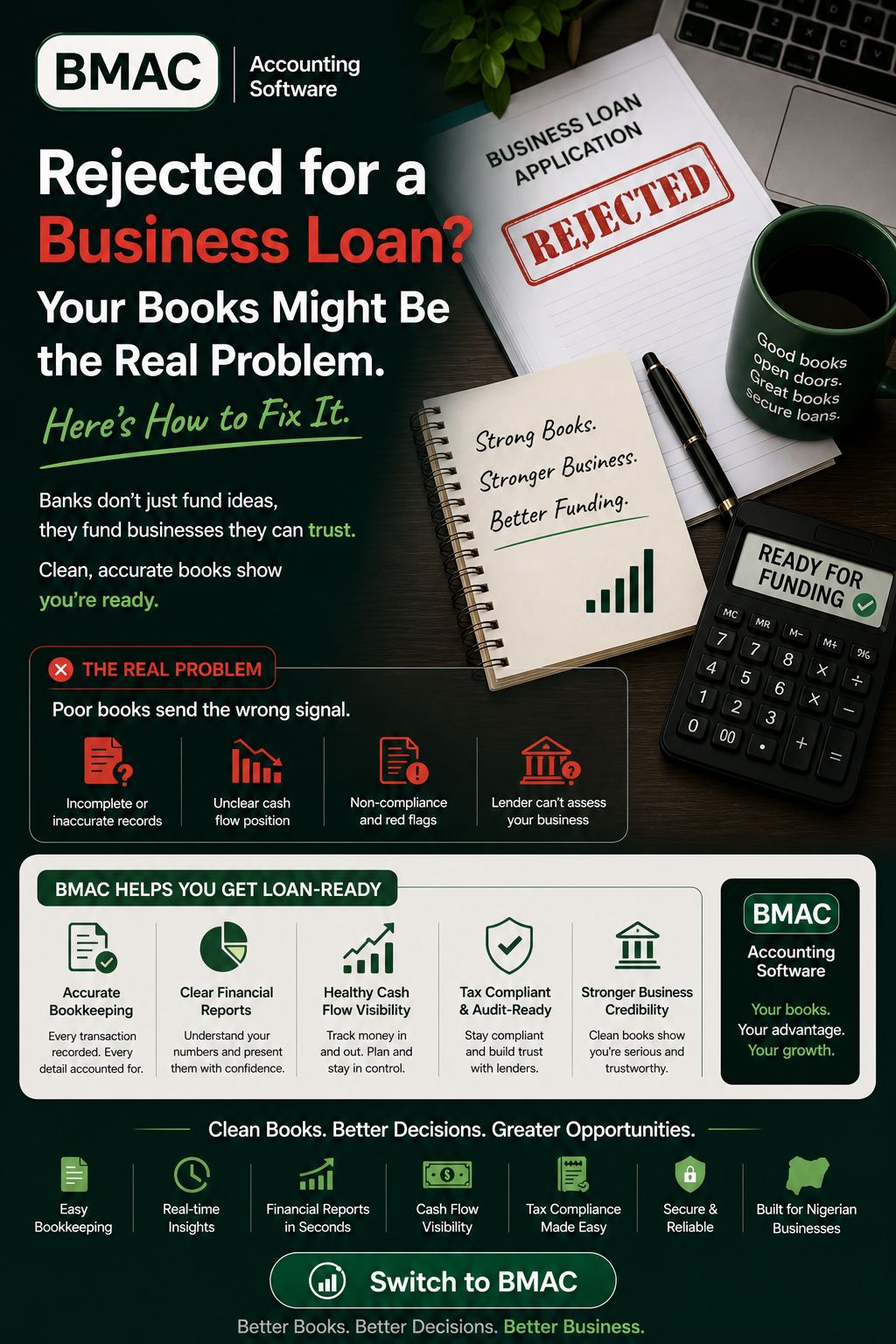
Rejected for a Business Loan? Your Books Might Be...
-
-
-
Latest Posts
-
-
-
-
 11 MAY, 2026
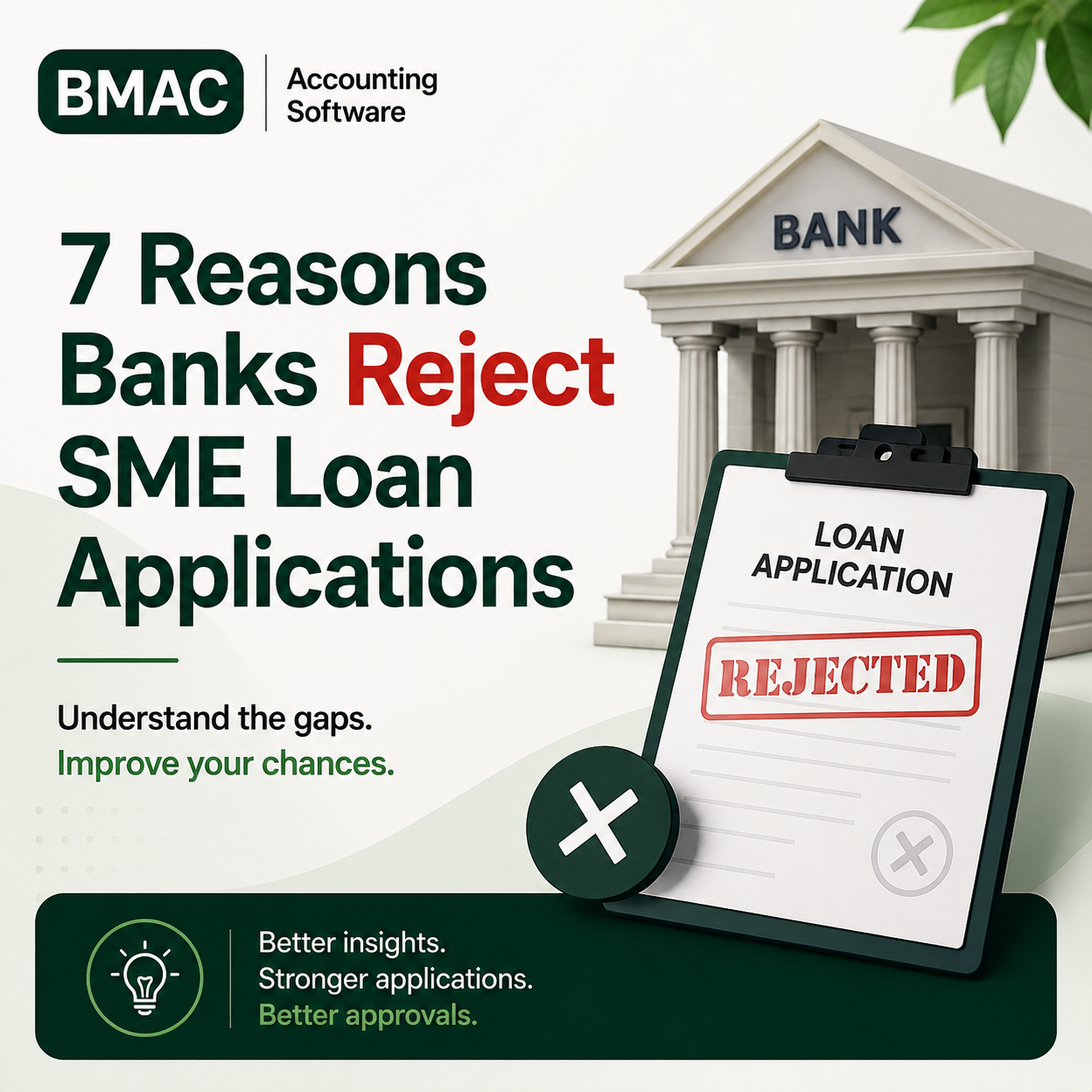
7 Reasons Banks Reject SME Loan Applications (And...
-
-